

10

Superior Hiking Trail | Guide to Backpacking Campsites
Way to Camp # 10 | Backpack Camping on a National Scenic Trail
The Public Land:
The Superior Hiking Trail.
This 310 mile, wilderness character hiking path traverses the highlands of Minnesota's north shore of Lake Superior. From a northern terminus on the Canadian border, to a southern terminus below the city of Duluth this continuous footpath creates access to
Is it fair to label the Superior Hiking Trail a public land?
The trail deservedly occupies the mind as a singular outdoor recreation destination, owing to the successful branding and communications efforts of the Superior Hiking Trail Association, the non-profit who manages it. While it traverses many different lands belonging to local, state, federal and private owners, it is formally an included segment of the much longer North Country National Scenic Trail. As a section of a federally designated national scenic trail, its complicated but fair enough to consider it, at least, a specific amenity of our public lands system.
Approach :
The Draw: The best backpacking experience Minnesota can offer.
Framed by the cultural institution that is American backpacking, long distance multi day National Scenic Trails (social,
the Superior Hiking Trail is Minnesota's response - on its own a highly renowned backpacking destination,
contextually, A great entry level backpacking experience to prepare for anywhere else in the world.
"Wilderness Character": Remoteness without high risk.
Nearly always surrounded by protected natural areas, and almost always feeling remote, in truth the hiker is never very far away from a trailhead.
-
Camping so close to scenic, high volume rivers and cascades really only happens at the campsites on this trail.
Of Minnesota Camp Guide's 23 Ways to Camp on Minnesota Public Lands, the Superior Hiking Trail includes the following:
#10. Backpack Camping on a National Scenic Trail
Expected Use:
To serve as single overnight stays while multi-day hiking on this long distance trail.
Not destinations for weekend or longer stays.
Administrative :
1 Trail (or 2) 94 campsites $Free 0% reservable
The trail, including its bridges and campsites are built and maintained by the non-profit Superior Hiking Trail Association.
While the ground it crosses are owned by government agencies and private landowners the point of contact and the organization of staff and volunteers who are to thank most for this amazing piece of recreation infrastructure are the SHTA.
The ~310 mile Superior Hiking Trail existed before the Congressional designation of the North Country National Scenic Trail. The NCT corridor routes over and along many other existing trails including the SHT. While this website categorizes the SHT under the banner of a national scenic trail designation (because it is) the de facto administration of life on this trail is very much lead by the Superior Hiking Trail Association.
Backpack camping is only allowed at the designated campsites.
-
No camping is allowed at parking lots or at any undesignated sites.
-
No dispersed camping is allowed anywhere along the trail, despite traveling through state and national forests at times.
These campsites are free. No permits are required.
No reservations. Not even first come, first served!
Campsites must be shared. There is an expectation that any arriving hiker is absolutely allowed to amble on in and pitch their tent.
-
'Early birds' definitely get worms = the best pick of quality tent pads (flat, private, better views).
Etiquette:
Some notes; make your best attempt to respect the following:
-
Avoid setting your shelter directly adjacent to the fire ring and commons area.
-
First conflict is between others having a campfire and the safety of your tent from sparks/embers.
-
Second conflict is that best practice is to prep and eat food at commons areas and away from tents.
-
-
Respect the cleanliness of the drinking water source.
-
Rinse or wash upstream from where people gather and filter water.
-
Some water sources are not high volume or moving. Maybe don't rinse and wash things in these.
-
It's unavoidable that dirty feet have been rinsed in the same spot someone drinks from, maybe just try to keep it a secret.
-
-
Amenities & Skills :
Primitive , but popularly used backcountry campsite accommodations.
These campsites are primitive, backcountry accommodations meant to serve the business of completing a long hike on the trail.
These campsites are considered remote. Most do not have cell phone service. Having comfort and confidence in backcountry settings is necessary. That said, these are great for first experiences of remote backpacking. The front country roads and trailheads (especially in the central and southern portions) are within a mile or three at nearly all times.
☑ Cleared and level tent pad sites on natural substrate.
-
Anywhere from 2 - 8 depending on campsite size.
-
The first hikers to arrive get higher quality pads, and the quality descends to rootier, more rugged and less level options.
☑ A "commons area", surrounding:
☑ Rock fire rings.
☑ Wooden benches, or natural log seating.
☑ Backcountry pit latrines. Not enclosed and open to the elements, but located somewhere mostly private.
-
Do not throw anything except toilet paper into the latrines.
☐ Gather , filter and treat drinking water from a wild source. There is no potable water provided.
-
Most campsites are located on a dependable source of wild water. Some have sources that dry up in midsummer. Some have no source at all.
☐ Practice backcountry food and trash storage.
-
☐ No permanent bear boxes are installed.
-
Avoid all woodland critters, the local black bears included - by keeping all trash, food and scented hygiene products secure;
-
Correctly use bear hangs, bear barrels or bear bags.
-
Do not leave trash, food or cookware unattended.
-
-
Have trash bags and receptacles ready to pack out all of your garbage. Pack out what you pack in.
☐ Firewood is not provided. Gather sustainably. Collect only already dead and downed wood.
☐ Practice 'leave no trace' hygiene.
-
When rinsing off in water bodies do not use soap products directly in the water.
-
Biodegradeable soaps must be used in collected water away from the source, then dumped onto soil.
-
-
When disposing of gray/brown water - disperse in a wide cast that doesn't leave a concentrated residue.
-
Includes water if having washed dishes.
-
Particularly includes toothpaste spitting!
-


Why This Guide? And Other Resources.
When you're on thru-hike mode turned up to eleven, campsite selection is determined simply by which is nearest at the sun begins to set. The only variable that would move you forward or have kept you short is whether a site was completely dry of drinking water. This guide is no matter there.
When you are working the dials, even a little bit, towards comfort, enjoyment and 'optimizing' your trail experience you'll find yourself wishing and wondering you knew how this campsite you're at compares to the one up ahead? This guide is for those hikes.
Every awesome day on the hiking trail isn't always, but can be compounded by an evening and overnight in the backpacking campsites that are admittedly higher quality than others. [Every single campsite is an achievement of the Superior Hiking Trail Association volunteers, members and staff that I am beyond grateful to have. :)]
The purpose of this guide, in providing descriptions and a respectful comparative ranking (any night spent on the trail is 5 star!) is to identify and celebrate the best of the Superior Hiking Trail backpack camping experience. To that end, this resource supports the following trip goals:
-
Making the most out a section or thru-hike; where adjusting mileage is worth it for the more scenic or interesting campsite to end the day, having a long lunch break or taking a zero day.
-
Sampling the 'cream of the crop' for the ultimate hit-and-run experience of the best of what SHT backpack camping can offer on a single overnight or weekend outing. Time can be a limited resource. Or you've got new initiates to convince that more days on trail are well worthwhile.
★ 1 - 5 What are the criteria that impacts these rankings?
Most Impactful
-
Water. Always looking forward to water.
-
Moving water is better than still. Larger volume is better than smaller.
-
Large volumes of moving water allow rinsing, wading and swimming - high score. Small, still pools are for drinking water only.
-
Closer to the tent pads is much better. If I can hear it from tent, great. If I can see it from tent, the best.
-
Topography. Excellence is surrounding ground that is interesting (heights, slopes, hills, banks) but keeps the common areas and tent pads flat and level.
More Impactful
-
Quality of Tent Pads. I don't care about the substrate - until it rains. Then I wish for a grassy or otherwise organic bed to keep my tent from caking in what is now mud.
-
Trees. Mostly for aesthetics. The trail grants a variety of hardwoods and conifer mixes throughout, but I'm happier with open, airy and mature groves than the thick, claustrophobic stands of young aspen, spruce and alder. Sun and shade can be had at any site, and preferences completely depend on weather and season.
Less Impactful
-
Distance from main trail.
-
The view from the latrines.
Other Resources.
These are the official resources produced by the Superior Hiking Trail Association.
Minnesota Camp Guide presents the campsites on NPS river maps in the following format,
adding images, descriptions, hike-in/drive-in designations and a rating.
☑ The official trail Map Series from Superior Hiking Trail Association
☑ Superior Hiking Trail Databook from Superior Hiking Trail Association
☑ Guide to the Superior Hiking Trail from Superior Hiking Trail Association
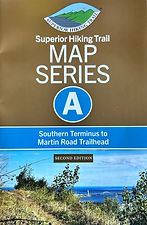

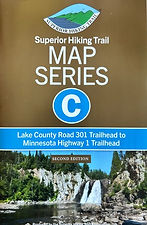


The Campsites Catalog
The Superior Hiking Trail | Designated Campsites
F 294.9 Campsite Legend ★ 1
F (Map Series) 294.9 (Mile Marker Northbound) Campsite Name ★ 1 (Guidemaker's Rating)
A general description of the campsite. An impression of the place written by the guidemaker while seated there.
-
Water: ☑ Present. ☐ Not present.
-
⦿ Reliable throughout season, good flow. ⦿ Seasonally unreliable, low flow or low quality. ⦿ No water.
-
-
Size: As determined by SHTA. (S) Small: (M) Medium: (L) Large:
-
Tent Pads: Counted by guidemaker. A conservative count, not including the spots which are used as last resort.
-
-
Amenities: ☑ Pit latrine toilets and rock fire rings always present. ☐ Various arrangements of log/lumber benches surround common areas around fire ring.
-
Coordinates location of the campsite.
-
★ Less Remote: Campsites that are less than one mile from a trailhead receive a mention. This is to identify the most accessible or lower stakes out and back hike-in camping opportunities for first time outings or simple trips for testing gear shakedowns.
Map Series F: Northern Terminus to Pincushion Mountain Trailhead
F 294.9 Andy Creek ★ 1
A shallow rise in swampy alder-ground. Patchy balsam fir surrounds the commons area. A wide vista of campsite from the latrine.
-
☑⦿ Water: A small, alder choked creek. A little walk from campsite.
-
Size (S). Tent Pads: 3-4 of good quality.
-
☑ Pit latrine toilet. ☑ Rock fire ring. ☑ Two bench commons area.


F 289.8 Jackson Creek ★ 3
Past a gate of glacial erratics, into a dense forested height of land, thick with spruce and balsam. Rests just above a charming creek that enters a wetland, offering friendly access to light water.
-
☑ ⦿Water: A small creek.
-
Size (S). Tent Pads: 4-5 of good quality.
-
☑ Pit latrine toilet. ☑ Rock fire ring. ☑ Three bench commons area.
-
★ Less Remote: A little over one mile.


F 286.5 Caribou Pond ★ 2
On a rugged slope and in close quarters of thick balsam & spruce. An impressive beaver dam spills moving water, providing ambience. A 'semi-vista' when looking towards the pond.
-
☑ ⦿ Water: Most immediate access is the beaver pond. Moving water outflow is an option a little hike north, with some bush tramping.
-
Size (S). Tent Pads: 4-5 of good quality.
-
☑ Pit latrine toilet. ☑ Rock fire ring. ☑ Two bench commons area.


F 282.8 North Carlson Pond ★ 2
Thick young forest with lots of balsam, spruce and shrubs. Mostly flat ground. Very nearby, a lovely little creek enters a wetland.
-
☑ ⦿ Water: The creek, with enough volume to offer an enticing soaking pool, like a grass banked jacuzzi.
-
Size (M). Tent Pads: Flat ground with several great tent pads.
-
☑ Pit latrine toilet. ☑ Rock fire ring. ☑ One bench commons.


F 280.7 South Carlson Pond ★ 3
On a peninsular ridge, hosting a fairly open forest of great species diversity; spruce, balsam, cedar, birch and aspen with much of the ground carpeted in club mosses. On one aspect is a wide, grassy wetland viewshed.
-
☑ ⦿ Water: Carlson Creek runs alongside with pools for wading or soaking feet.
-
Size (M). Tent Pads: 4-5 of good quality.
-
☑ Pit latrine toilet, with nice view. ☑ Rock fire ring. ☑ Two bench commons area.


F 277.9 Hazel ★ 1
An alder choked approach to an unattractive and claustrophobic thicket of dogwood and hazel with some scattered aspen, balsam and spruce.
-
☐ ⦿ Water: Strong rivulets of water run the spongy ground in spring and into the season probably serve mosquito breeding better than they'll serve you.
-
Size (S). Tent Pads: 4-5 of good quality.
-
☑ Pit latrine toilet. ☑ Rock fire ring. ☑ Three bench commons area.


F 266.2 Northwest Little Brule ★ 3.5
On risen ground above a spacious lower floodplain bench on a creek sized section ot the Little Brule River. Not too dense of spruce, birch and balsam to interrupt the limited viewshed. An airier option occurs in the adjacent stand of aspen.
-
☑ ⦿ Water: Adjacent to a flowing, bouldery creek with gravel bars and feet soaking spots.
-
Size (S). Tent Pads: 4-5 of good quality.
-
☑ Pit latrine toilet. ☑ Rock fire ring. ☑ Two bench commons area.


F 266.2 North Little Brule ★ 3.5
Next door to NW Little Brule, and a better pick. Much the same but offers a wider view of the river bend, through thin, airy spruce and birch stands.
-
☑ ⦿ Water: Especially on the southern approach via trail, the river offers plunge pools, mossy outcrops and cobble beaches before transforming into an inaccessible slot canyon.
-
Size (M). Tent Pads: 6-7 of good quality.
-
☑ Pit latrine toilet. ☑ Rock fire ring. ☑ Two bench commons area.


F 265.8 South Little Brule ★ 3
Most interesing topography of the the three Brule sites, this campsite feels "layered". Humps and mounds of ground between a wooded draw and a cliff dropping to an acoustic creek canyon. A sense of the great, wide open in the lakebound direction. Uncrowded by birch, spruce and the occassional cedar or the huge greeting aspen.
-
☑ ⦿ Water: Narrow, flowing creek that is a bit of a walk to access comfortably, considering this campsite is on steep ground above it.
-
Size (S.) Tent Pads: 3-4 reasonably flat, this site is very sloped.
-
☑ Pit latrine toilet. ☑ Rock fire ring. ☑ four bench commons area.


F 260.6 Kadunce River ★ 3.5
Flat ground on a high bank above creek. Surrounded by airy spruce, birch, balsam and patches of bright, red osier dogwood.
-
☑ ⦿ Water: A bit of walk to access, but earns a full extra point for the stretch of rapids with natural whirlpool jacuzzis.
-
Size (S.) Tent Pads: 4-5 of good quality, some are grassy.
-
☑ Pit latrine toilet. ☑ Rock fire ring. ☑ Two bench commons area.
-
Nearest trailhead: Under one mile.


F 260.1 West Fork Kadunce River ★ 2.5
A flat, wide and open clearing well above a deep and steep-sided slot canyon. Spruce-balsam-birch surround. If you prefer, a more grotto like option is pitching on the conifer shrouded, moss covered bench tucked precipitously above the canyon drop. Edgy.
-
☐ ⦿ Water: Since the adjacent creek is in a canyon, you'll need to lace up your hiking boots and walk 0.3 miles to access comfortably.
-
Size (M.) Tent Pads: Many flat tent pads.
-
☑ Pit latrine toilet. ☑ Rock fire ring. ☑ Two bench commons area.
-
Nearest Trailhead: One mile.


F 259.8 Crow Creek ★ 2
On a terrace between higher ground and the lower bench of the creek, amidst spruce, balsam and birch. Either Kadunce site is a better pick than this one, except that access to water is much more immediate here.
-
☑ ⦿ Water: Directly adjacent to tents, a splashy creek with shallow foot soaking pools.
-
Size (M.) Tent Pads: 6-7 flat tent pads.
-
☑ Pit latrine toilet. ☑ Rock fire ring. ☑ Three bench commons area.


F 258.6 Kimball Creek ★ 4
An absolutely charming, 'secret garden' feeling to this valley on a flat promontory between the confluence of two creeks. Access to native brook trout fishing, if you come back with a rod.
-
☑ ⦿ Water: Excellent sound of wide, splashy riffles and shallow with places to wade and soak feet, but not swim.
-
Size (S.) 4-5 quality tent pads.
-
☑ Pit latrine toilet. ☑ Rock fire ring. ☑ Two bench commons area.
-
★ Less Remote: Very close to trailhead parking.


F 256.1 Cliff Creek ★ 3
Very spacious, flat and wide on a rise above the creek. Sun and shade amidst fairly mature birch, aspen, balsam and spruce. An old sentinel aspen tree stands at the entrance.
-
☑ ⦿ Water: Easy enough access to a slow but moving creek. Shallow and cobbly.
-
Size (L.) Tent Pads: 6 + quality tent pads.
-
☑ Pit latrine toilet. ☑ Rock fire ring. ☑ Three bench commons area.


F 255.0 Durfee Creek ★ 2
A small, and close quarters alcove in thick trees. Atop a steep climb from the attractive creek.
-
☑ ⦿ Water: Quick flowing riffles across gravel beach and rock bars, with ample space to wade in shallows.
-
Size (L.) Tent Pads: 2-4 of good quality.
-
☑ Pit latrine toilet. ☑ Rock fire ring. ☑ Three bench commons area.


F 252.6 Wood's Creek ★ 4
The topography and vegetation create several private feeling 'compartments' to choose from. Some are directly on the banks of the creek and others on the main rise above, so you can select the volume setting of the running water.
-
☑ ⦿ Water: A straight, narrow course through boulders. Places to soak feet.
-
Size (M.) Tent Pads: 4-5 of good quality.
-
☑ Pit latrine toilet. ☑ Rock fire ring. ☑ 3 bench commons area, sloped.
-
★ Less Remote: Under one mile.


F 250.1 East Devil Track ★ 4
Super neat. A flat shelf between steep upland and the large, lower course of the Devil Track River. Sun and shade from the birch, balsam, spruce and cedar. An easy gradient access to water with impressive cliff banks.
-
☑ ⦿Water: A high volume, boulder strewn riverrun for deep wading or a decent bathe, if not a shallow swim.
-
Size (S.) Tent Pads: 2-3 comfortably.
-
☑ Pit latrine toilet. ☑ Rock fire ring. ☑ Two bench commons area.


F 250.0 West Devil Track ★ 4.5
The nearby section of Devil Track River is packed with features - eroding cliff banks, sculpted red rhyolite edifices, big cobble beaches, small rapids whirlpools and a few foot cascade.
-
☑ ⦿ Water: Fast flowing course over hard rock and cobble beaches, great wading and washing.
-
Size (L.) Tent Pads: 5-6 of good quality.
-
☑ Pit latrine toilet. ☑ Rock fire ring. ☑ Two bench commons area.


Map Series E: Pincushion Mountain Trailhead to Temperance Wayside Trailhead
E 239.4 North Bally Creek Pond ★ 2
A soggy, vegetated shoreline access to the pond without direct view from the campsite. Feels open/airy despite brushy surroundings. Unexciting, but takes care of business.
-
☑ ⦿ Water: Look for a tiny brook inlet besides the pond direct.
-
Size (S.) Tent Pads: 4-5 of good quality.
-
☑ Pit latrine toilet. ☑ Rock fire ring. ☑ Two bench commons area.


E 239.2 South Bally Creek Pond ★ 2.5
Would choose over North, for the limited view and more comfortable and immediate access to the pond. Enclosed in brushy woods.
-
☑ ⦿ Water: Another running water outlet besides pond edge in early season.
-
Size (M.) Tent Pads: Around 4 flat, quality tent pads. Others rugged.
-
☑ Pit latrine toilet. ☑ Rock fire ring. ☑ Three bench commons area.


E 238.0 Sundling Creek ★ 2.5
A small, balsam studded ridge partitions the campsite from the creek. Open to sun, sky and stars with a charming edging of carpet moss on approach. Prefer to the Bally Creek sites, but not by much. Not really worth the long spur off the main trail.
-
☑ ⦿ Water: A small, but flowing stream overgrown with alder.
-
Size (M.) Tent Pads: 4-5 of good quality.
-
☑ Pit latrine toilet. ☑ Rock fire ring. ☑ Two bench commons area.
-
★ Less Remote: Very close to trailhead parking.


E 234.5 North Cascade River ★ 3.5
Doubled amenities. Quite large, and has the feeling of two campsites. Hedges of hazel embedded with thick spruce and cedars surround and separate the two.
-
☑ ⦿ Water: Disappointingly distant from river water access. Very wide and shallow.
-
Size (L.) Tent Pads: 4-5 of good quality.
-
☑ 2 pit latrine toilets. ☑ Rock fire ring, metal fire grate. ☑ Two commons areas.


E 232.1 Cut Log ★ 3
An attractive and airy, balsam & birch woods on the edge of mature maple hardood forest. Perched on a rise between an eroded ditch from seasonal runoff into the deep tributary creek valley. The namesake giant, mossy log has a cool chair carved into it.
-
☑ ⦿ Water: The water source is a tall and steep staircase away from tents, and not enough for quality rinsing or recreation.
-
Size (S.) Tent Pads: 5-6 of good quality.
-
☑ Pit latrine toilet. ☑ Rock fire ring. ☑ Three bench commons area.


E 231.7 Boreal ★ 3.5
Upon higher terrain, above a steep tributary valley away from the main river. While young conifers swathe one side, much of the site has an open canopy inside very old birch and maple. Sightlines are broken by fairly heavy shrubs.
-
☑ ⦿ Water: A bit of a chore up and downhill to access this narrow stream.
-
Tent Pads: 2 of good quality with limited privacy screen, several others are directly adjacent the fire ring and commons area.
-
☑ Pit latrine toilet. ☑ Rock fire ring. ☑ Two bench commons area.
-
47.72868, -90.54032


E 231.0 Trout Creek ★ 5
Stunning! Lightly perched above the confluence of Trout Creek and dramatic Cascade River, a very large flat under a grand hall of mature cedars and shaggy young spruce. Sounds, views and water access abound. On a Spur, opposite bank of river from the Main Trail, I would take the spur just to stay here.
-
☑ ⦿Water: Fast and wide stretch of Cascade for heavy rinsing, not exactly a swimming hole.
-
Size (L.) Tent Pads: 6+ of good quality.
-
☑ Pit latrine toilet. ☑ Rock fire ring. ☑ Three bench commons area.
-
★ Less Remote: About a half mile.


E 228.6 Camp Creek ★ 3.5
Verdant, shaggy vegetation and woods enclose a selection of fairly partitioned tent pads all within earshot of moving water.
-
☑ ⦿ Water: A low volume stream across slab bedrock. Not much for rinsing or recreation.
-
Size (L.) Tent Pads: 6+ of good quality.
-
☑ Pit latrine toilet. ☑ Two rock fire rings. ☑ Five bench commons area.


E 225.4 Spruce Creek ★ 4
A damp and dank bowl of bare soil amongst the ankles of a large cedar grove - in a good way. This cool refuge also offers immediate access to creek. Awesome moss strewn wall of boulders.
-
☑ ⦿ Water: A cobble and boulder strewn creek with a small wading hole.
-
Size (L.) Tent Pads: 2 of good quality, others reasonable.
-
☑ Pit latrine toilet. ☑ Two rock fire rings. ☑ Three bench commons area.
-
★ Less Remote: A little over one mile.


E 223.2 Jonvick Creek ★ 1.5
A super gnarled and root wrankled piece of ground adjacent to a sloppy beaver pond.
-
☑ ⦿ Water: Just for drinking. Jonvick Creek is deep in a grassy, beaver wetland underneath a boardwalk.
-
Size (S.) Tent Pads: One okay tent pad.
-
☑ Pit latrine toilet. ☑ Rock fire ring. ☑ Three bench commons area.


E 220.9 East Lake Agnes ★ 5
This scenic windwsept peninsula is surrounded with scenic, open water. Some spots up the trail offer heightened lake views from your tent. At the communal campfire, near water's edge has a wonderful ambience of chopping waves (given the breeze.)
-
☑ ⦿ Water: Great swimming.
-
Size (M.) Tent Pads: 2 perfectly level tent pads, others with a root or two.
-
☑ Pit latrine toilet. ☑ Rock fire ring. ☑ Two bench commons area.
-
★ Less Remote: Less than one mile.


E 220.5 West Lake Agnes ★ 2
Frustrating, compared to nearby East Agnes. Why must we climb a hill and leave the lakeshore behind? Surely for good reason, but water access becomes a chore. It is an ample, flat and rootless space in pretty sugar maple stand. Offers increased privacy or alternative to popularity of East Agnes.
-
☑ ⦿ Water: Lakeshore is nearby, but is a shallow, vegetated and organic access less enjoyable than clean, rock lakeshore of East Lake Agnes.
-
Size (M.) Tent Pads: 3-4 of good quality.
-
☑ Pit latrine toilet. ☑ Rock fire ring. ☑ Three bench commons area.


E 217.6 East Poplar River ★ 3.5
Directly on the flat bench river bank of slow, wide river. An open, sunny clearing surrounded by spruce stands. Sounds of moving water.
-
☑ ⦿ Water: Decently comfortable access to a wading/swimming session.
-
Size (S.) Tent Pads: 1 small and grassy, 1 dirt with some ruggedness.
-
☑ Pit latrine toilet. ☑ Rock fire ring. ☑ Log bench.


E 217.2 West Poplar River ★ 3
An open and airy sloping rise above the chuckling river. Still sheltered by mature spruce and birch.
-
☑ ⦿Water: Close access, but not immediate, to a bouldery river with some decent wading.
-
Size (M.) Tent Pads: 4-5 of decent quality, noticeably sloping.
-
☑ Pit latrine toilet. ☑ Rock fire ring. ☑ Two bench commons area.
-
★ Less Remote: A little over one mile.


E 215.1 Mystery Mountain ★ 2.5
Up in the heights, nearby an impressive inland overlook but no particular views from tent pads. Still in heavy woods of spruce, birch and some pine.
-
☐ ⦿ Water: No water here.
-
Size (L.) Tent Pads: Several of good quality.
-
☑ Pit latrine toilet. ☑ Rock fire ring. ☑ 3 bench commons area.


E 210.7 East Rollins Creek ★ 3.5
Tucked on a bench just adjacent to a charming, soundful creek. Less spacious than typical and on half sloping, but feels comfortably clean, manicured and opened from the heavy surrounding vegetation.
-
☑ ⦿ Water: A narrow, trickling stream where small wading or foot rinsing pools can be found.
-
Size (S.) Tent Pads: 4-5 of good quality.
-
☑ Pit latrine toilet. ☑ Rock fire ring. ☑ Three bench commons area.


E 210.7 West Rollins Creek ★ 3
In a spacious hall of cedar trees, this is a rugged and slightly sloping piece of ground.
-
☑ ⦿ Water: No immediate access to the creek, but is nearby.
-
Size (M.) Tent Pads: 2-3 of good quality.
-
☑ Pit latrine toilet. ☑ Rock fire ring. ☑ Three bench commons area.


E 208.7 Onion River ★ 2
Accomodating in space, but popping with overgrown weeds in a stand of shaggy spruce trunks. "River" is a bit overpromised for the small creek that is a short walk away from campsite.
-
☑ ⦿ Water: Low volume flow over gravel and cobble. With some bushwhacking determination, small soaking & rinsing pools can be found downstream of trail crossing.
-
Size (L.) Tent Pads: Plenty of flat spots.
-
☑ Pit latrine toilet. ☑ Two rock fire rings. ☑ Two bench commons area, with a picnic table.


E 207.5 East Leveaux ★ 1.5
Cozy and/or claustrophobic in the tight confines of thick alder and brush, despite the wide open sky above. Amenities are in shambles.
-
☑ ⦿Water: Entering rivulet under trail offers alternative water source to the vegetated shoreline edge of the pond.
-
Size (M.) Tent Pads: About 2 distinct tent pads, wonderfully grassy.
-
☑ Pit latrine toilet. ☑ Rock fire ring. ☑ Two bench commons area.


E 207.4 West Leveaux ★ 2.5
On a cozy flat above, and with limited view of a charming pond to gaze upon. Spruce of all sizes surround, and woodsy vegetation compartmentalizes various tent pad nooks.
-
☑ ⦿ Water:
-
Size (L.) Tent Pads: Plenty. Some grassy, others sloped with light roots.
-
☑ Pit latrine toilet. ☑ Rock fire ring. ☑ Four bench commons area.


E 205.2 Springdale Creek ★ 3
The creek runs a deep, narrow draw. Above, the commons area of this campsite perches on a sharp, exciting edge. A beautiful mix of mature maple, birch, spruce and cedars offer shade shelter in a comfortably airy forest.
-
☑ ⦿ Water: A bit of a climb to access. Better in springtime, or increased rainfall - otherwise creek draw is stagnant and scuzzy. Just for drinking.
-
Size (M.) Tent Pads: 4-5 of good quality.
-
☑ Pit latrine toilet. ☑ Rock fire ring. ☑ Two bench commons area.


Map Series D: Temperance Wayside Trailhead to Minnesota Highway 1 Trailhead
D 196.3 South Cross ★ 5
An open glade, heavily studded with spruce tree trunks. More elevated above the big, gorgeous river than North, there are great sightlines in trade for the short descent to and from water access.
-
☑ ⦿ Water: High volume rushes over boulders & bedrock with a big swimming/wading pool and occassional whirlpools.
-
Size (M.) Tent Pads: Many flat spots avoid surrounding roots.
-
☑ Pit latrine toilet. ☑ Rock fire ring. ☑ Three bench commons area.


D 196.2 North Cross ★ 5
Awesome space, in stand of spruce directly adjacent the scenic stretch of river. A secondary fire ring nests on the cobble shoreline of acoustic cascades.
-
☑ ⦿ Water: Gorgeous, high volume flow over rhyolite bedrock and gravel beach with benches, cascades and swim pools of all sizes.
-
Size (S.) Tent Pads: Several flat pads in a gnarly surrounding.
-
☑ Pit latrine toilet. ☑ Rock fire ring. ☑ Two bench commons area.


D 195.6 The Ledge ★ 4
Elevated on a bench above river, with an interrupted view through dense copse of spruce and birch. Water remains audible.
-
☑ ⦿Water: A small climb to access shallow riffles for foot soaking.
-
Size (S.) Tent Pads: One great tent pad, others crowd one another.
-
☑ Pit latrine toilet. ☑ Rock fire ring. ☑ Three bench commons area.


D 194.8 The Falls ★ 4.5
A close series of flat and open clearings in thick, but airy spruce and birch woods. Not wide open view, but adjacent to the sound of quick moving water.
-
☑ ⦿ Water: A high volume flume cuts through bedrock, with a respectable little cascade and natural jacuzzi.
-
Size (S.) Tent Pads: Several great, flat pads with others a little rocky.
-
☑ Pit latrine toilet. ☑ Rock fire ring. ☑ Three bench commons area.


D 193.0 Fredenberg Creek ★ 3.5
Spacious and flat tent sites deep in stands of mature sugar maple forest and occasional cedars.
-
☑ ⦿ Water: A stony, trickinling brook passes by directly adjacent - if you search you may find a small spot to soak your feet.
-
Size (L.) Tent Pads: Several of great quality, others cobbly.
-
☑ Pit latrine toilet. ☑ Rock fire ring. ☑ Four bench commons area.


D 190.1 Dyer's Creek ★ 3
On a rise above audibly moving water. The tent pads are partitioned into 'hidden' nooks by growth of shrubs, young birch and spruce.
-
☑ ⦿ Water: A calm, slow bend in a small creek. Search downstream for little feet soaking spots, but leave the immediate pool for drinking water.
-
Size (M.) Tent Pads: 2-3 of good, at least decent quality.
-
☑ Pit latrine toilet. ☑ Rock fire ring. ☑ Three bench commons area.


D 186.7 Sugarloaf Pond ★ 1.5
On generally sloping ground, where higher up is open subcanopy spruce and birch and gnarled ground. Lower is thickly brushed alcoves to pitch tents, and feels tightly squeezed. An open water pond and wetland offers cool birdlife observations, without a direct view from campsite.
-
☑ ⦿ Water: The still water pond is heavily vegetated and the one easy, hard shore access point, with heavily organic bottom should be reserved for fetching water.
-
Size (M.) Tent Pads: 2-3 of good quality.
-
☑ Pit latrine toilet. ☑ Rock fire ring. ☑ Three bench commons area.


D 184.3 Crystal Creek ★ 3.5
Actual views of Lake Superior! - from the latrine. Very impactful topography surrounds this campsite, from the macro full frontal headland facing the great lake to the 'Old Mine Canyon' draw which rends the site free from it. Hard to pass the lower rating, but lack of significant water is a big deal.
-
☑ ⦿Water: Unreliable in dry conditions. Precious, tiny pools for drinking water treatment only.
-
Size (M.) Tent Pads: Several to choose from, though dusty and sloped.
-
☑ Pit latrine toilet. ☑ Rock fire ring. ☑ Two bench commons area.


D 183.1 East Caribou River ★ 5
Under the shoulders of large pines, spruce and birch this airy glade carries the chorus of a compact cascade and sits adjacent to very comfortably accessible bedrock benches on an attractive stretch of small river.
-
☑ ⦿ Water: Great volume with deep wading pool and open, sunny bedrock banks.
-
Size (L.) Tent Pads: Many good tent pads to be had.
-
☑ Pit latrine toilet. ☑ Rock fire ring. ☑ Three bench commons area.


D 183.0 West Caribou River ★ 4.5
On the terrace of a forested slope down to the river. More compact than it's neighbor, the commons is an open clearing, with tent pad nooks tucked into vegetated alcoves.
-
☑ ⦿ Water: A light descent to the river, with good volume for soaking feet and wading.
-
Size (S.) Tent Pads: 2 of good quality, a couple others decent.
-
☑ Pit latrine toilet. ☑ Rock fire ring. ☑ Three bench commons area.


D 180.2 Horseshoe Ridge ★ 2
Nestled into the cragginess of an 'alpine' feeling area, after the trail climbs taken to reach it. Despite the climbing there are no great views from site. Rather, big aspen and spruce offer shade and brushy woods fills in.
-
☑ ⦿ Water: No significantly flowing water up here. You might avoid the hiking to the officially recommended source with a tiny, still pool that collects in the back.
-
Size (M.) Tent Pads: 2-3 of good quality.
-
☑ Pit latrine toilet. ☑ Rock fire ring. ☑ Two bench commons area.


D 175.2 Aspen Knob ★ 2
Actually, a stand of young spruce on pretty flat ground.
-
☑ ⦿ Water: Thin, low volume creek only best for drinking.
-
Size (S.) Tent Pads: 4-5 of good quality.
-
☑ Pit latrine toilet. ☑ Rock fire ring. ☑ Three bench commons area.

D 173.2 Blesener Creek ★ 4.5
A storybook meeting of small creek with East Baptism River surrounds this peninsular campsite. Audible water everywhere. Mature spruce, cedar and birch mix with hardwoods and ferns on the edge of river.
-
☑ ⦿ Water: Super neat. A wide, flat flume of bedrock holds small boulders and shallow but flowing wading pools.
-
Size (S.) Tent Pads: 2 good comfortable pads, limited.
-
☑ Pit latrine toilet. ☑ Rock fire ring. ☑ Three bench commons area.


D 172.6 East Branch Baptism River ★ 3
A tight clearing in thick woods, slightly uphill from lazy moving water.
-
☑ ⦿ Water: Slow moving over rock cobble. Vegetated with riparian grasses and leaning alder. Downstream from immediate access can soak feet but not much other recreation to be had.
-
Size (S.) Tent Pads: 2 good tent pads.
-
☑ Pit latrine toilet. ☑ Rock fire ring. ☑ Three bench commons area.


D 170.8 North Sonju Lake ★ 3
An attractive birch & spruce strewn slope down to a marshy arm of Sonju Lake. Limited views of the open water.
-
☑ ⦿ Water: The lake here has a soggy, organic edge with limited access in the mud and grass. Unlikely to find wading or swimming desirable from here.
-
Size (M.) Tent Pads: 4-5 of good quality.
-
☑ Pit latrine toilet. ☑ Rock fire ring. ☑ Several bench commons area.


D 170.5 South Sonju Lake ★ 4.5
Clearly better than North - a big, comfy even grassy clearing for the commons. A decent hint of lake viewshed through thick screen of mostly spruce. But a short little walk over to Lilly's Island, for a tiny sampler of Boundary Waters -esque evening hang.
-
☑ ⦿ Water: Great, open swimming off the boulders of Lilly's Island.
-
Size (L.) Tent Pads: 4-5 of real good quality.
-
☑ Pit latrine toilet. ☑ Rock fire ring. ☑ Two bench commons area, with other custom furniture.


D 167.5 North Egge Lake ★ 3
On a slight hill, and in light forest just above the lakeshore. A thin screen of young spruce interrupts but keeps enough sightlines of the lake for interest.
-
☑ ⦿ Water: A wide open lake for swimming if you're willing to wade out through the vegetated, cobbly shoreline.
-
Size (M.) Tent Pads: 3-4 of good quality.
-
☑ Pit latrine toilet. ☑ Rock fire ring. ☑ Three bench commons area.


D 167.3 South Egge Lake ★ 3.5
Directly adjacent to the lakeshore and remaining in verdant woodsy growth, there remains screened view of open water from some tent pads. Open sky above the commons area.
-
☑ ⦿ Water: Better than North, a flat boulder on water's edge serves as a comfy, natural dock access to open water.
-
Size (M.) Tent Pads: 3-4 of good quality.
-
☑ Pit latrine toilet. ☑ Rock fire ring. ☑ Three bench commons area.


D 162.7 Leskinen Creek ★ 2
A large, open and flat commons offering some breathing room in the subcanopy of thick sugar maple forest lowlands surroundings. Quiet, and extra dim at sunset but can hear distant sounds from community of Finland.
-
☑ ⦿Water: Just to have drinking water is problematic here - I struggled to do better than bushwhacking to a stagnant, very organic pool.
-
Size (L.) Tent Pads: 5+ of good quality.
-
☑ Pit latrine toilet. ☑ Rock fire ring. ☑ Three bench commons area.


D 159.0 Section 13 ★ 2.5
Some amazing views are gifted on the trail's approach nearby, but none directly from the campsite. Encompassed by shrubs and young hardwoods, it still feels high, open and airy.
-
☐ ⦿ Water: Most immediate access is the beaver pond. Moving water outflow is an option a little hike north, with some bush tramping.
-
Size (M.) Tent Pads: 2-3 great tent pads, others decent.
-
☑ Pit latrine toilet. ☑ Two rock fire rings. ☑ A high quality bench, or logs.


D 152.9 East Kennedy Creek ★ 2
While the site sits frontally 'facing' open landscape of Lake Superior, the woods are thick - birch, aspen, alder, dogwood densley screening from any viewshed but also partitioning private feeling tent nooks. Still receives spots of sun.
-
☑ ⦿ Water: A trickle of water through a cobble chute - just enough for drinking.
-
Size (M.) Tent Pads: Several of good quality.
-
☑ Pit latrine toilet. ☑ Rock fire ring. ☑ Two bench commons area.


D 152.9 West Kennedy Creek ★ 2.5
A more spacious, open commons is carved out of the thick, young woods and partitions tent sites for additional privacy. Probably more often used than East Kennedy.
-
☑ ⦿ Water: A very lightly flowing brook in drier season.
-
Size (M.) Tent Pads: 4-5 of good quality. Some with grassy substrate.
-
☑ Pit latrine toilet. ☑ Rock fire ring. ☑ Two bench commons area.


Map Series C: Minnesota Highway 1 Trailhead to Lake County Road 301
C 144.9 East Palisade Creek ★ 3
A stand of spruce, birch and aspen divide tent pad pockets while keeping open sightlines. No real view of creek from tents, but light sounds from it.
-
☑ ⦿ Water: Must descend steps to water, a low volume brook with small foot soaking pools downstream.
-
Size (M.) Tent Pads: 4-5 of good quality.
-
☑ Pit latrine toilet. ☑ Rock fire ring. ☑ Four bench commons area.


C 144.8 West Palisade Creek ★ 3
Heavy mixed forest of big spruce, birch and sugar maple surround another campsite of assembled open pockets. A grassy, rooted knoll for the commons and one particularly cool tent pad wrapped by whispering creekbed.
-
☑ ⦿ Water: Low volume creek with shallow foot soaking pools.
-
Size (L.) Tent Pads: 4-5 of good quality.
-
☑ Pit latrine toilet. ☑ Rock fire ring. ☑ Two bench commons area.
-
Nearest Trailhead: A little over one mile.


C 144.3 Round Mountain ★ 3
Surrounded by dense woods, the commons enjoys a wide open break in the canopy with grassy ground. A couple of flat tent pads hug the edge of descending hillside, but don't offer exceptional views.
-
☑ ⦿Water: A vegetated, earthen ditch course. Still pools found late season, best reserved for drinking water.
-
Size (M.) Tent Pads: 2 good quality, besides near the fire ring.
-
☑ Pit latrine toilet. ☑ Rock fire ring. ☑ Two bench commons area.


C 143.1 Bear Lake ★ 4.5
Super unique, and the best campsite lake view on the trail. A sure-footed approach to a series of tent pads as dirt terraces packed into clefts of rock. A spacious dirt terrace, and a smooth shoreline campfire commons area sit directly on water's edge with long views of open water.
-
☑ ⦿ Water: Excellent lake access, with more than one shoreline nook hangout.
-
Size (S.) Tent Pads: 4-5 of good quality, if squeezed in.
-
☑ Pit latrine toilet. ☑ Rock fire ring. ☑ One log bench commons area.


C 141.9 Penn Creek ★ 2.5
Some combination of heavy hardwood canopy, winding shallow brook and dank, mossy grotto give an air of 'ancient Amazonian temple entrance'. This is a deep campsite, with ongoing tent pads obscured from each other.
-
☑ ⦿ Water: If drinking water is pulled in or near the grotto, tiny foot soaking pools can be found downstream and ways back of the site.
-
Size (L.) Tent Pads: 6+ of good quality.
-
☑ Pit latrine toilet. ☑ Rock fire ring. ☑ Three bench commons area. with picnic table.


C 136.6 East Beaver River ★ 5
On the rocky shoulder of scenic cascade. Excellent open sightlines and soundscape, under mature pines and cedars. Limited number of top notch tent pads, and probably this scarcity increases their value.
-
☑ ⦿Water: High volume drops through bedrock cascade flume with options for wading and dunking in natural jacuzzi eddys and gravel beach.
-
Size (S.) Tent Pads: 2-3 of good quality, then rock/root interrupted.
-
☑ Pit latrine toilet. ☑ Rock fire ring. ☑ Three bench commons area.


C 136.3 West Beaver River ★ 4.5
A bit more accommodating in size than East, and more pragmatic. The river is a calmer, shallower stretch still sparkling with song. Riverbank is flatter, shallow and held by gnarly cedars so relaxing access.
-
☑ ⦿ Water: Chill access, great wading and rinsing, not quite swimmable.
-
Size (S.) Tent Pads: 4-5 of good quality.
-
☑ Pit latrine toilet. ☑ Rock fire ring. ☑ Three bench commons area.


C 131.9 Fault Line Creek ★ 3.5
With the comfortable feel of a rustic, cabin backyard - a lot of grass edged by wild plant growth. A great 'openness' without closed in forest canopy but no ground level sightlines of adjacent pond wetland.
-
☑ ⦿ Water: Would leave pond access for drinking water.
-
Size (M.) Tent Pads: 6+ of good quality, and most are grassy.
-
☑ Pit latrine toilet. ☑ Rock fire ring. ☑ Two bench commons area.


C 130.5 Beaver Pond ★ 2
This is a coarse and shaggy cut, ready for the brush to reclaim if the battle relents... small area with no views of pond. I suspect some folks are pitching nearer water's edge on southern approach and enjoying some open, airier viewshed and open water access.
-
☑ ⦿ Water: Don't find it direct from site (deep grass), rather seek access on southern approach.
-
Size (M.) Tent Pads: 4-5 of good quality.
-
☑ Pit latrine toilet. ☑ Rock fire ring. ☑ Two bench commons area.


C 128.8 Chapins Ridge ★ 3
Thick forest surrounds this open grove of mature pines, dropping needle carpet.
-
☐ ⦿ Water: A miniscule rivulet, when present.
-
Size (M.) Tent Pads: 2 good flats, rest are unfortunately sloped.
-
☑ Pit latrine toilet. ☑ Rock fire ring. ☑ Two bench commons area.


C 124.2 Southeast Split Rock River ★ 5
A very small, flat and open shelf - hemmed by steep hillside and the insanely pretty and active cascades. A handful of spruce for light shade. Upstream a two-tier waterfall and below huge, scenic sentinel rock formation. Rhyolite ramps grant spacious and comfortable river access. The steep climb to latrine isn't enough to dock this amazing spot's rating.
-
☑ ⦿ Water: An incredibly scenic and spacious swimming hole.
-
Size (S.) Tent Pads: 1... maybe 2. Likely, other hikers will move to nearby alternatives before attempting to share this one.
-
☑ Pit latrine toilet. ☑ Rock fire ring. ☑ Two bench commons area.
-
★ Less Remote: A little over one mile.


C 123.9 Northeast Split Rock River ★ 3.5
Inside the woods and away from the river's edge, there is no view of the water from campsite, but amazing bedrock cascades are close enough for long evening hangouts before retiring to tent.
-
☑ ⦿ Water: Rapids and small pools of bedrock riverbed.
-
Size (L.) Tent Pads: 4-5 of good quality.
-
☑ Pit latrine toilet. ☑ Rock fire ring. ☑ Three bench commons area.


C 123.7 Northwest Split Rock River ★ 3
A woodsy, brush enclosed clearing in a stand of spruce. A bit rough and overgrown feeling.
-
☑ ⦿ Water: A solid volume tributary with a deep wading hole.
-
Size (M.) Tent Pads: A few of decent quality, some grassy substrate.
-
☑ Pit latrine toilet. ☑ Rock fire ring. ☑ Two bench commons area.


C 123.4 Southwest Split Rock River ★ 4
Unfortunately separated from river by a cliff and steep bedrock.
-
☑ ⦿ Water: Most immediate access is the beaver pond. Moving water outflow is an option a little hike north, with some bush tramping.
-
Size (M.) Tent Pads: 4-5 of good quality.
-
☑ Pit latrine toilet. ☑ Rock fire ring. ☑ Two bench commons area.
-
★ Less Remote: A little over one mile.


C 119.5 Blueberry Hill ★ 2.5
A shrubby, dense series of fairly private alcoves with flat tent pads, some dirt and some grass.
-
☑ ⦿Water: Small creek.
-
Size (M.) Tent Pads: 4-5 of good quality.
-
☑ Pit latrine toilet. ☑ Rock fire ring. ☑ Three bench commons area.


C 113.3 Gooseberry (Multigroup) ★ 3
This is very accommodating in extent, but unexciting. Young woodland surrounds, accepting open sunlight besides the couple of mature spruce trees. Enough shrub vegetation to semi-screen the commons from various tent pads.
-
☑ ⦿Water: A little distant but a wonderful sand/gravel riverbank with a swimmable hole. The immediately adjacent "stream" has unreliable flow.
-
Size (L.) Tent Pads: 6+ large and flat. Dispersed with shrubs creating some partitions.
-
☑ Pit latrine toilet. ☑ Rock fire ring. ☑ Two bench commons area.
-
★ Less Remote: A little over one mile.


C 112.5 Middle Gooseberry ★ 3.5
A scraggly stand of young ash and thick with hazel. No sightline to the water despite being immediatley adjacent to a languid oxbow off the main river.
-
☑ ⦿ Water: A short walk to the main river offers a gravel bar beach and good swim hole.
-
Size (S.) Tent Pads: 2 great flat pads adjacent to commons.
-
☑ Pit latrine toilet. ☑ Rock fire ring. ☑ Two bench commons area.
-
★ Less Remote: A little over one mile.


C 112.4 East Gooseberry ★ 2.5
Particularly uncool. This large knoll retains dappled shade despite the dead and dying birch trees. Its problem is that the one good quality tent pad is immediately adjacent to the small commons area, then the trail has a tendency to bring hikers right through this spot instead of around. Disrupting.
-
☑ ⦿ Water: Steep bank access to a nearby backwater slough. Not a good spot to wade or swim.
-
Size (S.) Tent Pads: One good one. 2 other root rugged ones.
-
☑ Pit latrine toilet. ☑ Rock fire ring. ☑ Two bench commons area.
-
★ Less Remote: A little over one mile.


C 111.5 West Gooseberry ★ 4
Very high above a deep and clean stretch of the river, this wooded promontory juts out, a distance from the trail. Squeezing more than one tent into the small footprint would be tough, so you might get this one to yourself.
-
☑ ⦿ Water: A winding trail drops down to comfortable riverbank access. Makes a decent swimming hole.
-
Size (S.) Tent Pads: One single, large tent pad adjacent to commons area.
-
☑ Pit latrine toilet. ☑ Rock fire ring. ☐ No real camp furniture.


C 108.3 Crow Valley ★ 3
A large campsite area on low ground in mature cedar, spruce and hardwoods. Various flat, dirty tent pads to choose from, many of which are semi-screened by vegetation.
-
☑ ⦿ Water: A minor brook wraps the campsite, and where the bedrock pools enough water, is best reserved for drinking water gathering.
-
Size (M.) Tent Pads: 5-6 of good quality.
-
☑ Pit latrine toilet. ☑ Rock fire ring. ☑ Three bench commons area.


Map Series B: Lake County Road 301 Trailhead to Martin Road Trailhead
B 99.9 Silver Creek ★ 4
An unexpectedly awesome stream, with the campsite on adjacent hillside. Flatter tent pads are further back from stream. In a young, brushy mixed species forest.
-
☑ ⦿ Water: A hard charging watercourse over bedrock flume, includes a whirlpool jacuzzi.
-
Size (M.) Tent Pads: 4-5 of good quality.
-
☑ Pit latrine toilet. ☑ Rock fire ring. ☑ Three bench commons area.


B 94.2 Reeves Falls ★ 4
A wildly beautiful waterfall grotto hides below the uphill campsite, in brushy forest with privately screened tent pad nooks. Gathers sunlight but feels enclosed. Charming waterfall sounds present.
-
☑ ⦿ Water: The best little wading pool is also the most accessible water treatment spot.
-
Size (S.) Tent Pads: 4-5 of good quality.
-
☑ Pit latrine toilet. ☑ Rock fire ring. ☑ Three bench commons area.
-
★ Less Remote: A little over one mile.


B 90.2 Stewart River ★ 4
Directly adjacent the river in woodsy birch andmaple saplings. Several large, dirt tent pads, one is closer to water. Plenty of water chorus.
-
☑ ⦿ Water: A charging course with great depth for wading.
-
Size (M.) Tent Pads: 4-5 of good quality.
-
☑ Pit latrine toilet. ☑ Rock fire ring. ☑ Three bench commons area.


B 84.7 Ferguson ★ 4
Uphill from stream, woodsy but open sunlight. A couple of larger tent sites, screened from the rugged commons area. Light creek sounds.
-
☑ ⦿ Water: At the base of a tiny, scenic cascade a small creek flowing with good volume, can rinse feet but not really wade.
-
Size (S.) Tent Pads: 4-5 of good quality.
-
☑ Pit latrine toilet. ☑ Rock fire ring. ☑ Three bench commons area.


B 83.6 McCarthy Creek ★ 4
One small, dirty substrate clearing among thick, young mostly aspen stands. A short waterfall off a rock shelf creates excellent sound.
-
☑ ⦿Water: A charismatic pool at the foot of the waterfall makes for nice wading but is also the main drinking water access.
-
Size (S.) Tent Pads: A couple of good quality.
-
☑ Pit latrine toilet. ☑ Rock fire ring. ☑ Three bench commons area.


B 77.5 Big Bend ★ 3.5
One large common clearing in spruce and birch stand. Two sides are weapped by the trail. Sounds of rushing water throughout.
-
☑ ⦿ Water: A rushing, rocky creek in thick alders offers decent wading but great foot rinsing.
-
Size (M.) Tent Pads: 4-5 of good quality.
-
☑ Pit latrine toilet. ☑ Rock fire ring. ☑ Two bench commons area.


B 70.2 Fox Farm Pond ★ 2.5
Open and airy above in the tall aspen, with heavily screened undergrowth this sloped space has several dirty tent pads with a flat commons area. No real viewshed of nearby wetland.
-
☑ ⦿Water: A super organic piece of water with a soggy, grassy bank.
-
Size (M.) Tent Pads: 3-4 of good quality.
-
☑ Pit latrine toilet. ☑ Rock fire ring. ☑ Three bench commons area.


B 67.5 Sucker River ★ 3.5
Carved out from the thick woods surrounding are several fairly grassy tent pads. A large fallen tree gives the commons area a rough, unkempt first impression but it is technically a large bench. Lack of view of the nearby river.
-
☑ ⦿ Water: Isn't super scenic but is large and deep enough for a plunge.
-
Size (M.) Tent Pads: 3-4 of good quality.
-
☑ Pit latrine toilet. ☑ Rock fire ring. ☑ Log bench commons area.


B 63.5 Heron Pond ★ 2.5
Densely grown but airy, with open canopy birch & aspen. A narrow sightline of the open, tamarack wetland from the fire ring. Tent pads are totally screened and isolated from each other, and a couple have grassy bases.
-
☑ ⦿ Water: The beaver pond has a deep, clean edge bank access. for water treatment but is probably a messy wade/swim.
-
Size (M.) Tent Pads: 4-5 of good quality.
-
☑ Pit latrine toilet. ☑ Rock fire ring. ☑ Two bench commons area.


B 59.8 Lone Tree ★ 3
A wide open grassy meadow with the namesake solo maple tree welcomes your approach to the common area up front. Further back in the thick aspen, birch and spruce woods are two screened and isolated tent pads.
-
☑ ⦿Water: Downhill from the campsite is an old culvert with an organics laden pool. Good for gathering drinking water at this one spot, then overgrown with alder below.
-
Size (S.) Tent Pads: 2-3 of good quality.
-
☑ Pit latrine toilet. ☑ Rock fire ring. ☑ Three bench commons area.


B 54.3 White Pine ★ 3.5
Mature woods of maple, spruce, birch and aspen and assorted very large white pines surround spacious tent pads, most are privately screened. Some have grass, or pine needle substrate.
-
☑ ⦿ Water: A lazy bend of medium volume water with a wide open grassy bank access. Could definitley wade or dunk. The approach trail from campsite is long enough to earn it a 'spur' trail blaze.
-
Size (M.) Tent Pads: 4-5 of good quality.
-
☑ Pit latrine toilet. ☑ Rock fire ring. ☑ Log bench commons area.


B 53.1 Bald Eagle ★ 2
Adjacent to a large open pond, with some open overhead breathing room though view of water from the campsite is obscured by thick shrubs. One grassy tent pad alongside the commons, then several more dirty pads in the shade and concealment of vegetation.
-
☑ ⦿ Water: Direct access from campsite is soggy and overgrown. Cleaner access is found just south on trail.
-
Size (S.) Tent Pads: 3-4 of good quality.
-
☑ Pit latrine toilet. ☑ Rock fire ring. ☑ Two bench commons area.


Map Series A: Martin Road Trailhead to Southern Terminus
A 43.4 UMD Bagley Nature Area ★ 1
An open, grassy lawn. Surrounded by treeline that decently screens the urban development. Quite integrated into the recreation facilities of the university, it is in a moderately trafficked area. A real nice facility, but not a remote nature oriented experience. Only available to backpackers.
-
Sites 1-4 are reservable. Sites 5-6 are FCFS walk-in only.
-
$30/night. Payment cash box is present.
-
☑ ⦿ Water: A groundwater well pump delivers ample supply.
-
Size (L.) Technically it is 6 sites total.
-
☑ Biff style portable toilet. ☑ Metal fire ring. ☑ Picnic benches.
-
94° 5' 59.618" W 47° 47' 32.447" N
-
★ Less Remote: Immediately adjacent parking area.


A 27.2 Spirit Mountain Campground ★ x
On a rugged slope and in close quarters of thick balsam & spruce. An impressive beaver dam spills moving water, providing ambience. A 'semi-vista' when looking towards the pond.
-
☑ ⦿Water: Most immediate access is the beaver pond. Moving water outflow is an option a little hike north, with some bush tramping.
-
Tent Pads: 4-5 of good quality.
-
☑ Pit latrine toilet. ☑ Rock fire ring. ☑ Two bench commons area.
-
94° 5' 59.618" W 47° 47' 32.447" N
-
★ Less Remote: A little over one mile.
A 0.4 Red River Valley ★ x
On a rugged slope and in close quarters of thick balsam & spruce. An impressive beaver dam spills moving water, providing ambience. A 'semi-vista' when looking towards the pond.
-
☑ ⦿ Water: Most immediate access is the beaver pond. Moving water outflow is an option a little hike north, with some bush tramping.
-
Size (M.) Tent Pads: 4-5 of good quality.
-
☑ Pit latrine toilet. ☑ Rock fire ring. ☑ Two bench commons area.
-
★ Less Remote: A little over one mile.
Happy Camping.


Buy Me a Beer?
If you've had an amazing outing thanks in part to any resource on this project, please send a little thank you to support keeping it online for your future trip planning and for others. This is a totally independent piece of work. It has no business model. The occasional donations help pay to maintain the website and spend time developing more resources.
Cheers!